1
/
of
3
My Store
Narrowleaf Yucca
Narrowleaf Yucca
Regular price
$10.07 USD
Regular price
$12.00 USD
Sale price
$10.07 USD
Shipping calculated at checkout.
Quantity
Couldn't load pickup availability
• Yucca angustissima (Narrowleaf Yucca) is a striking and resilient species native to the Colorado Plateau
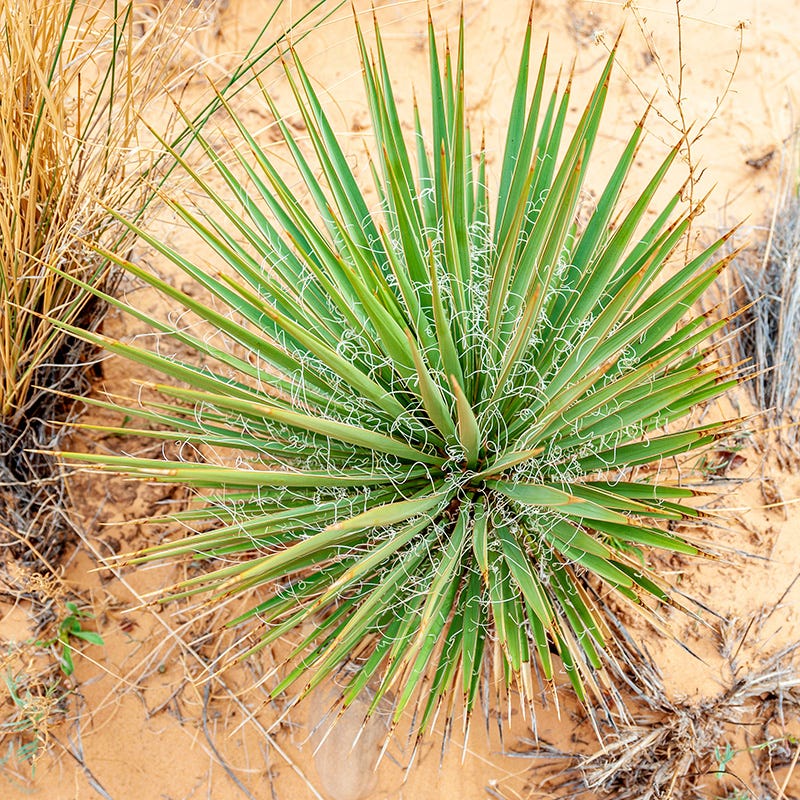
• Characterized by long, slender leaves which extend 30 inches tall and are accented by swirling white filaments
• Excellent for adding a distinctive sense of place and architectural interest to rock gardens, borders and naturalized areas
• Plant to build habitat for Tegeticula yuccasella (Pronuba Moth) – the only species able to pollinate this native Yucca!
• Characterized by long, slender leaves which extend 30 inches tall and are accented by swirling white filaments
• Excellent for adding a distinctive sense of place and architectural interest to rock gardens, borders and naturalized areas
• Plant to build habitat for Tegeticula yuccasella (Pronuba Moth) – the only species able to pollinate this native Yucca!
Description
Yucca angustissima (Narrowleaf Yucca) is native to the Colorado Plateau, particularly northern Arizona and southern Utah. With its spear-like leaves and elegant, tiered flower spikes, Yuccas are an essential plant in desert gardens and xeriscapes.
Yuccas enjoy a symbiotic relationship with Tegeticula yuccasella (Pronuba Moth) which lay eggs in the flowers while pollinating them.
Plant in areas with plenty of sunlight and little moisture and keep dry in the winter to avoid root rot. Once rooted deeply, it will survive on rainfall alone. Prune off flower stems once they become weathered. For a classic desert garden display, plant with Salvia azurea (Texas Sage), Chamaebatiaria (Fernbush), Chilopsis (Desert Willow), and Delosperma (Ice Plant).
Yuccas enjoy a symbiotic relationship with Tegeticula yuccasella (Pronuba Moth) which lay eggs in the flowers while pollinating them.
Plant in areas with plenty of sunlight and little moisture and keep dry in the winter to avoid root rot. Once rooted deeply, it will survive on rainfall alone. Prune off flower stems once they become weathered. For a classic desert garden display, plant with Salvia azurea (Texas Sage), Chamaebatiaria (Fernbush), Chilopsis (Desert Willow), and Delosperma (Ice Plant).